


ABP PRISM 2030 is an industry leading programme developed by ABP to improve the sustainability of red meat within this decade. It is the logical next step in the company’s sustainability journey. By working with a selected group of farmer suppliers and in partnership with the Andersons Centre (Andersons) and Harper Adams University ABP’s goal is to achieve a step-change in sustainability at farm-level.

About the company
ABP Food Group is a fully integrated agri-business. Its main business function – the processing of beef and lamb – is supported by three interdependent divisions: a pet foods division, a renewables division and a proteins division. This unique structure ensures that ABP’s products are orientated around both sustainable processing and sustainable farming practices. The group employs over 14,000 people across Europe with four sites situated in Northern Ireland in Dungannon, Lurgan, Newry and Lisnaskea.
The issue
The food industry is working hard to mitigate its impact on the climate. ABP has mapped the farm-to-fork footprint of its meat processing operations and has established that 90% of emissions fall within Scope 3 boundaries, with a large proportion of these at farm level.
“The UK livestock industry has rightfully earned its reputation for producing some of the highest quality meat in the world. Now, our focus is to ensure that UK beef and lamb leadS the way not just in quality, but sustainability. We believe that PRISM can equip our suppliers with the tools to help achieve this goal.” George Mullan, ABP Northern Ireland
What the company did
ABP is one of the largest food processors in the UK. In alignment with its Science Based Targets (SBTI) ABP has pledged to reduce absolute carbon emissions (scope 1 & 2 targets) across all its divisions by 42% by 2030 against a baseline of 2016.
In addition, 15,000 family farms form a vital part of ABP’s beef and lamb supply chain. Through knowledge sharing and working proactively with its farmer suppliers, ABP is now supporting farmers to reduce carbon emissions in the supply chain, with a goal of 25% reduction in Scope 3 emissions by 2030.

ABP PRISM 2030 is a data-driven initiative with a singular, actionable goal: to improve the sustainability of red meat in the UK by 2030.
ABP intends to achieve this goal by equipping its suppliers and the wider beef and lamb sector with advice and knowledge that can benefit livestock farms and collectively showcase their beef and lamb as among the best and most sustainable in the world.
PRISM launched in November 2022 supported with an initial investment of £1.5 million. Since then, ABP has been closely collaborating with 350 selected farmer suppliers including 52 in Northern Ireland. The programme is headed by ABP UK Head of CSR Phil Hambling.
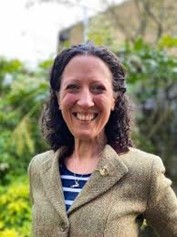
Professor Jude Capper is ABP Chair of Sustainable Beef and Sheep Production at Harper Adams. She leads the scientific research arm of PRISM. Professor Capper is a renowned expert on the environmental impacts and sustainability of global livestock production systems. Her role entails the development of research and taught postgraduate programmes in sustainable ruminant meat production systems for the benefit of students and the extended UK beef & lamb sector.
Professor Capper is also the lead research scientist for more sustainable ruminant production systems at ABP UK’s Research Farm (Bromstead Farm).
Research from both Bromstead and ABP Ireland Demo Farm (Sheppard’s) have shown that the level of methane emissions in beef production systems could be reduced by up to 40% against ABP’s current average, when a more data-driven approach is applied across the supply chain.
The first step was assessing the baseline carbon footprint of the participating beef and sheep farms. Farms of varying sizes and system types are involved providing a representative indication of the UK’s livestock farming landscape.
Whilst PRISM 2030’s initial focus was achieving a reduction of greenhouse gas emissions, since then it has become more apparent that adopting a holistic approach of improving animal performance as well as environmental indicators such as water use, soil health, biodiversity and resource efficiency, play a huge role in making farms more sustainable.
ABP works alongside its partners Agrecalc and Harper Adams University to collate, analyse and interpret farm data into meaningful reports that can be utilised by the farmers.
Early analysis shows that every farm system is different. The PRISM team forensically examines each dataset so relevant trends and mitigations can be shared and complete understanding of key drivers and key performance indicators (KPI’s) of ‘sustainable farming’ can be agreed.
UK farms are unique in terms of climate and geography as well as different production systems, breeds and stock numbers. But five common focus areas for improvement have been identified and shared:
- Improving pastures
- Reducing age at slaughter
- Improving livestock health and reproduction
- Reducing fuel consumption
- Using by-product feeds
Personalised action plans are supported by ABP with online webinars, and in-person events. ABP facilitates peer-to-peer learning and knowledge transfer through the additional input of expert speakers from around the globe.
PRISM also includes access to a ‘Sustainability Grant’ whereby farmers can receive up to £1,000 to purchase a capital item that helps implement changes to improve their farm’s environmental performance.
Second-stage assessments on improvements made within the programme and mitigations adopted are now underway.
Spotlight on ABP NI PRISM Farmer

Organic farmer Dale Orr’s understanding of sustainable agricultural practices has been strengthened by PRISM. Through the programme he has been able to receive support in achieving targets on his farm.
His sustainable farming practices include:
- Renewable energy
Dale has a 4KW solar system installed on the farm. This generates sustainable electricity for use on the farm and reduces the overhead electric bill.
- Building efficiency
Buildings are designed at construction with temperature control in mind. All sheds are well ventilated without being draughty, providing optimal comfort for livestock. LED lights are in use in all areas of the farm, replacing fluorescent lights, which are less energy efficient and hazardous at end of life.
- Reducing waste
Dale runs a concentrates free system in his lamb fattening system, which eliminates the risk of any spoiling of nuts in the shed as well as storage space and disposal of plastic feed bags. Dale has found that year-round grazing is sufficient to finish his lambs achieving good carcass performance, which is a testament to the farm’s grassland management and grazing strategy. Silage bales are made to feed to cattle while housed in the winter. This prevents any wastage associated with pit spoils that can occur from an open-face pit.
Dale is passionate about maintaining current machinery & items used on farm, such as troughs and feeders. He makes repairs as necessary and avoids the need to purchase new equipment. When necessary, he prefers to buy pre-used equipment to aid a circular economy. Feeding kale to cattle also reduces the number of bales required on farm, thereby reducing black plastic wrap waste.
- Improving pastures
Mixed species grass swards and incorporating clover improves soil structure on the farm, while increasing nutrient density and eliminates the need to apply chemical fertilisers.
Despite being more labour intensive, Dale believes the farm’s paddock grazing system enables 40% more grass availability and therefore feeds more animals sustainably.
Low inputs of fertilisers and feed and promotion of a grass-based diet for the animals and reduce the GHG emissions of the farm. The LESS method is used for slurry application (Low Emission Slurry Spreading), which reduces the losses of nitrogen to the atmosphere and maximises nutrient availability in the soil.
- Livestock health and reproduction
The herd and flock are closed except for buying in stock bulls and rams. This improves biosecurity of the farm , leading to a reduction the use of common antibiotics. There is a focus on breeding for lighter cows, and Herefords are favoured due to their excellent feed conversion ratio and carcass potential. Cattle spend a minimum of 240 days at grass, maximising the grazing season and reducing the need for concentrate feeding. By choosing sires for his breeding herds carefully, Dale is increasing the genetic merit of all animals on farm.
A central pillar of his way of farming is increasing the genetic merit of his cattle and sheep to improve feed conversion ratios, reducing inputs and maximising his carcass outputs. (Breeding more efficient animals to convert less food into the same or higher carcass weight.)
- Nature and biodiversity
The farm has been an organic system for 26 years, which is an indication to the good grassland management and animal husbandry on the farm. Dale is maintaining profitability while also increasing sward variation and encouraging wildlife to thrive alongside his stock.
The clover is a natural fixator of nitrogen, improving soil nutrients and availability to the grass sward growing above. Whilst some sward species provide food source to other birds and insects as well as the stock on the farm.
“We were already engaging in carbon audits and although the results are very good, they don’t currently take in to account our grasslands or hedges. PRISM should demonstrate we are well on our way to being a net zero operation.” Sam Chesney, ABP PRISM Beef Farmer, Ards Penninsula
“Gathering data is extremely important and is a key component of the PRISM PROJECT – we all need to know where we are performing well and badly, so we can identify improvements that can be made and drive the industry forward. Only then can we send a clear message why UK farming is ahead of the world when it comes to animal welfare, quality assurance and climate mitigation.” Crosby Clelland, ABP PRISM Sheep Farmer, Co Down
To find out more about taking part in the NI Environmental Benchmarking Survey, visit www.bitcni.org.uk/niebs.