


As a manufacturer of aircraft parts, Spirit AeroSystems is committed to investing in innovative technologies and skills to support the transition to net-zero flight. The organisation is very much focused on environmentally responsible manufacturing processes.

Spirit developed an ambitious energy strategy, comprising a range of initiatives, to help address its reliance on fossil fuel derived energy generation. The outcomes included reduced energy consumption and waste, increased operating efficiency and securing more sustainable power.
Renewable Energy
Spirit recognised its Belfast site’s reliance on fossil fuel derived energy supply as a financial risk as well as an opportunity to deliver on policy commitments around resource efficiency and climate action. The organisation recognised that local energy costs were almost double that of its sister-sites in North America and significantly higher than those of many other competitors. It was vital therefore to reduce those costs to ensure the Belfast operations remained competitive and in a position to retain and win new work.
The company developed an ambitious energy strategy comprising a range of initiatives to help address its reliance on fossil fuel derived energy generation by reducing consumption, tackling inefficiency and securing more sustainable power. The plan included two key projects:
Energy from Waste
Through collaboration with partners, the business supported the development of an Energy from Waste facility closet to its Airport Road complex.
Through an innovative gasification process, the plant can convert circa 180,000 tonnes of landfill destined waste to electricity. In keeping with the circular economy theme, waste generated through aerospace manufacturing operations is diverted from landfill to provide electricity to supply those same manufacturing operations.
Solar Installation
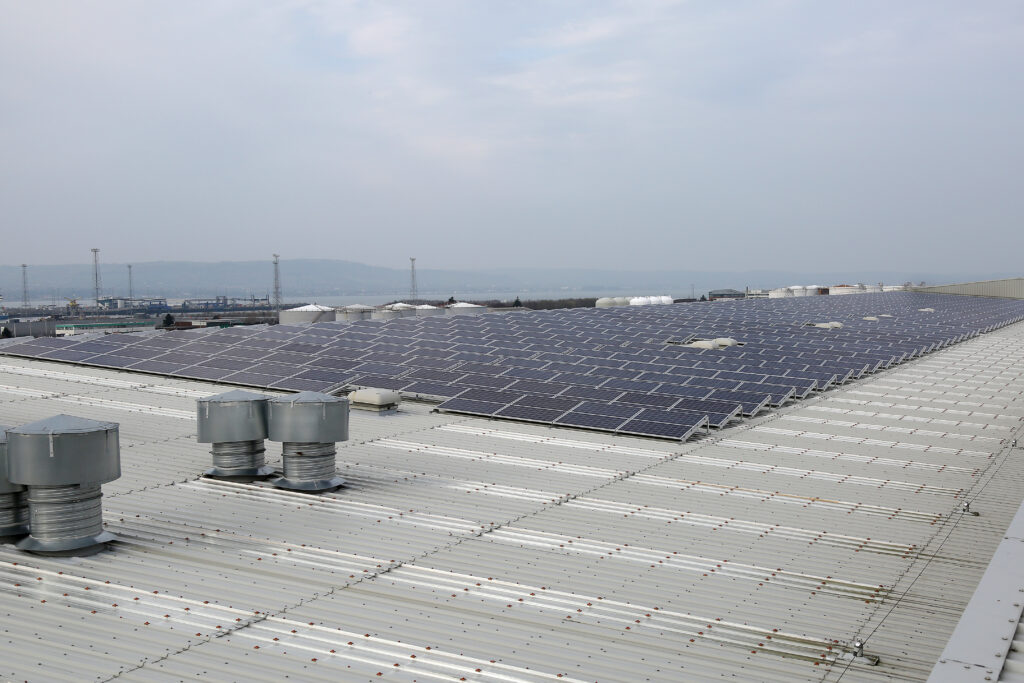
Again through collaboration with partners, the organisation installed 14,000 photovoltaic panels on the roof of one of its key manufacturing facilities. Given the size of the building, 600,000 sq. ft. it was the largest solar rooftop installation plant on the island of Ireland when installed. The plant provides circa 3.5MW of renewable energy to help power the organisations manufacturing operations.
Optimisation
As well as securing energy from renewable generation, the company has invested substantially in a robust monitoring regime. Through extensive sub-monitoring and analysis of consumption patterns, the business has been able to understand trends and high demand plant. This level of detail has been a valuable input when optimising initiatives to deliver the greatest improvement e.g. air handling unit settings and scheduling and loading of autoclaves.
Wider Environmental Governance
Spirit AeroSystems renewable energy strategy is a key component of a wider and more holistic set of arrangements for compliance and continual improvement. The organisation has a well embedded environmental management system, supplemented with:
- Design for Environment
- Life cycle approach to aircraft design
- Innovative aircraft
- Reduced weight & new fuel systems
- Ambitious target programme cascaded to all business units
- Volatile Organic Compound (VOC) reduction
- Material replacement
- Recycling systems
- Waste management programme
- Source segregation
- Robust monitoring
- Application of waste hierarchy
- Biodiversity action plan
- Environmental training programme
- Change management process
- Evaluation of implications from concept stage
Impacts and Outcomes
- 35% reduction in tonnes of CO2 emissions since 2019 (with 53% of all electricity consumed in 2024 being supplied from Energy from Waste and 3.5% from Solar PV). (Equates to 78% of all electricity demand for the company’s Airport Road complex in 2024).
- A number of energy improvement measures implemented between 2022-2024, helped contribute to calculated energy savings of 4,689,844 kWh and 1,241 tonnes CO2e. These measures included but were not limited to: optimisation of steam systems and cleanroom air handling units, installation of LED lighting and increasing the energy awareness of employees, through training, alerts and signage.
- Spirit AeroSystems has signed up to the Business in the Community’s (BITC) Climate Action Pledge to reduce greenhouse gas emissions by 30%.
- The company has also signed up to Business in the Community’s Climate Charter. GHG emissions have been reduced by 45% since 2018.
- Spirit has been Top Performer in BITCNI Environmental Benchmarking for three consecutive years.
Environment | Spirit AeroSystems
To find out more about taking part in the NI Environmental Benchmarking Survey, visit www.bitcni.org.uk/niebs.