

Part of the Vidrala Group, Encirc is based across three sites in Derrylin, Northern Ireland and two in England; Elton in Cheshire and Bristol.
About the company
Encirc employs almost 2,000 people and each year produces more than 3 billion glass containers for leading global brands. Encirc is also one of the leading wine, beer and spirits bottle fillers in the UK, and is the only company to offer a full ‘360’ approach to the beverage supply chain, creating flexibility, support and minimising carbon impact.
Impacts
The impacts of climate change pose significant challenges for all businesses, including the fast-moving consumer goods industry. Potential issues include disruptions to main operations and supply chains due to extreme weather events, and damage to infrastructure from rising sea, river, and groundwater levels. In January 2025, Storm Éowyn caused extensive damage in Northern Ireland, particularly in Co. Fermanagh, due to extreme winds. Although the Derrylin site was not directly impacted, this event highlighted the need for effective mitigation measures, as the frequency of such extreme weather events is predicted to increase in the future.
In addition to these tangible challenges, shifts in consumer preferences towards sustainable products necessitate innovation as we pursue decarbonisation under our broader ZE30 mission. These combined factors can significantly impact productivity, profitability, and the long-term sustainability of our business.
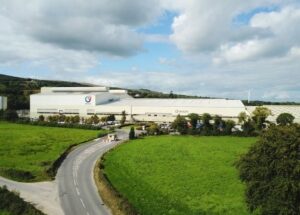
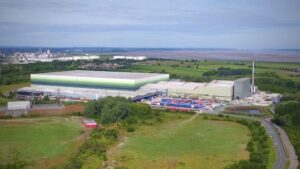
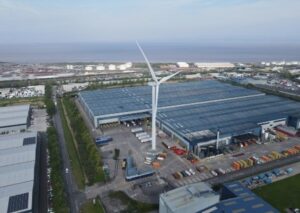
Encirc’s three sites in Derrylin, NI and Elton and Bristol, England.
Climate Risk Assessment Methodology
The Climate Change Risk Assessment method used takes into consideration all our plant assets and their activities. This assessment has been done by performing site visits with our specialist consultants with the goal of finding how our plants will be affected by the latest climate change predictions.
We assessed the severity of each risk depending on its potential to halt business operations. With our glass furnaces in 24/7 operation, our priority is to ensure that our furnaces are constantly in operation and fed with raw materials to manufacture our products.
Findings
Although we cannot disclose the exact outcomes of the risk assessment as it is still under review, the findings have identified several potential risks related to climate change that could impact our business operations. The assessment considers both the near and distant future, anticipating that the effects of climate change will increase in severity over time. Potential impacts to consider at this stage range from the slowing down of manufacturing processes caused by fluctuations in ambient temperatures, to condensation on our bottles preventing proper labelling of products during bottling.
We intend to utilise the risk assessment as an active working document and planning tool in the context of business continuity. This way, the risks can also be reviewed on a regular basis.
Business Continuity Planning
The findings allow us to produce climate change vulnerability and risk assessments, and establish how the risks are linked and may evolve over time.
The assessment, currently in its final stages, provides a risk register with a holistic view of the potential risks at each site which can help support our operational and legals team to make informed decisions at executive level, in support of suitable CAPEX-funded mitigation projects for the near and far future.
The identification of climate change-related risks allows for actional adaption measures to be identified, and for the forecasting of effective ‘hard’ and ‘soft’ solutions to be made. Ultimately, the assessment allows for strategies and action plans for implementation to be rolled out as part of overall business continuity planning and future-proof our business operations.